NOBIDA Dyslexia Simulations: “A Walk in the Shoes,” an Engaging Activity to Improve Understanding
|
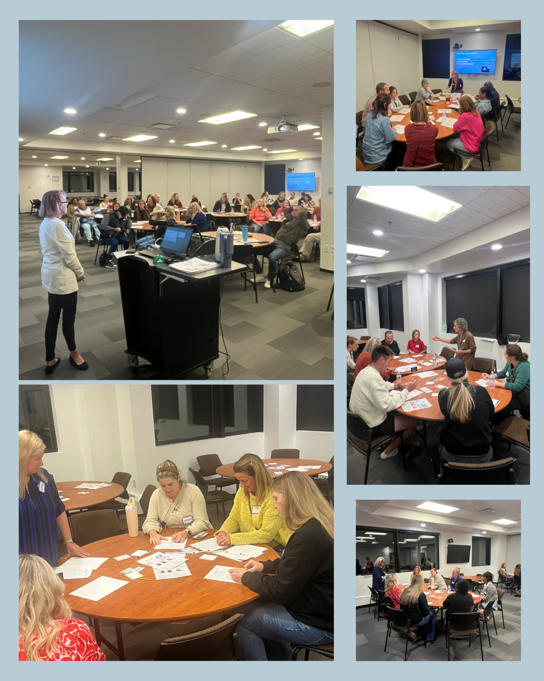
Dyslexia Simulations allow individuals without dyslexia to experience literacy challenges in a “mock” classroom reading and writing session. These events help build awareness and empathy in attendees for those living with dyslexia. From our professional perspective, simulations also help our team of educators fine-tune classroom literacy skill-development strategies based on non-dyslexic participants’ reactions to the challenges they face in the simulation. IDA of Northern Ohio proudly hosts Dyslexia Simulations at schools and other institutions to shed light on literacy learning styles that differ from the norm. Typical learners can more readily gain literacy skills through a multitude of teaching methods, but those with dyslexia require explicit, systematic instruction using strategies aligned with Structured Literacy. This type of instruction helps all learners gain literacy skills, but it is a necessary teaching strategy for individuals with dyslexia. |
Photos of an IDA of a Northern Ohio Dyslexia Simulation in process during October Dyslexia Awareness Month events.
|
|
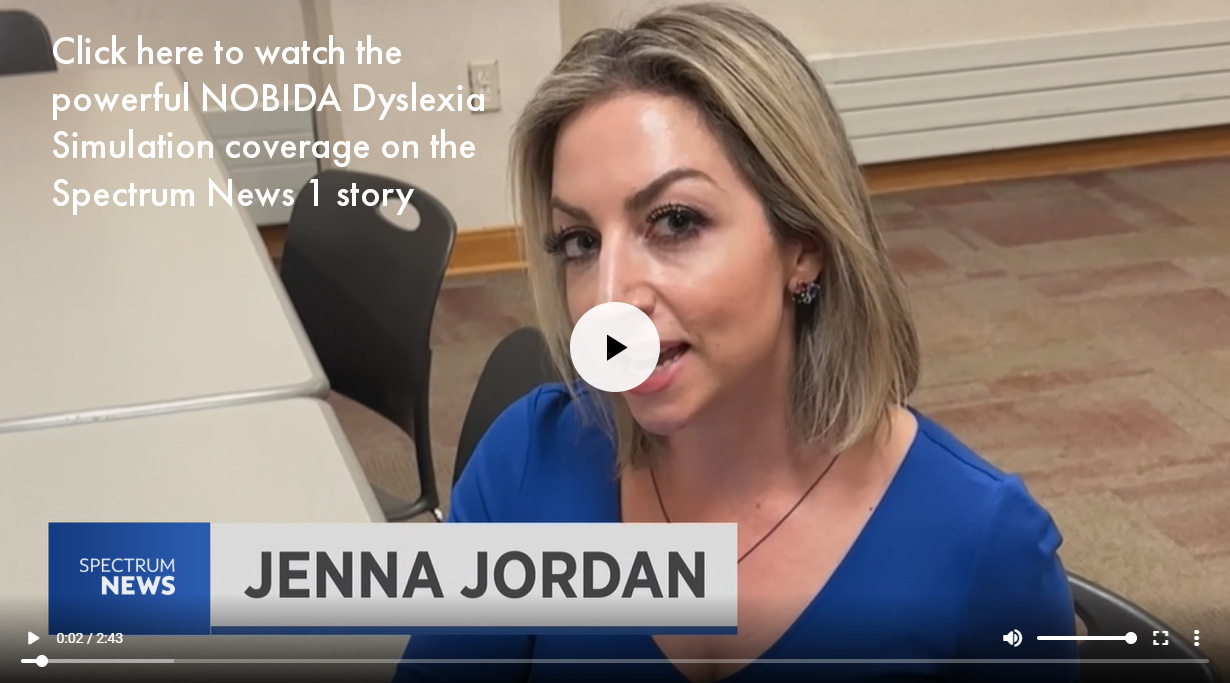
A 2023 simulation, hosted at Shaker Heights High School, was featured in a powerful Spectrum News 1 story. The story follows one participant’s reactions to the simulation activities, posing challenges for her as she tries to read and write. Taxing simulation activities require participants to use their non-dominant hand to write answers to challenging reading assignments and to write while looking in a mirror, all while receiving scripted, unhelpful instructor feedback. These activities simulate what students with dyslexia face daily and illuminate how this makes them feel.
Over the past year, northern Ohio’s John Carroll University has incorporated NOBIDA’s Dyslexia Simulation program into its School of Education’s undergraduate curriculum. Effective in 2025, teacher preparation programs in Ohio must include literacy coursework that ensures alignment with the Science of Reading Metrics (structured literacy), including the International Dyslexia Association's Knowledge and Practice Standards. The simulation prepares students by providing an authentic representation of the struggles students with dyslexia face in the classroom and helps future educators grow awareness. |
|
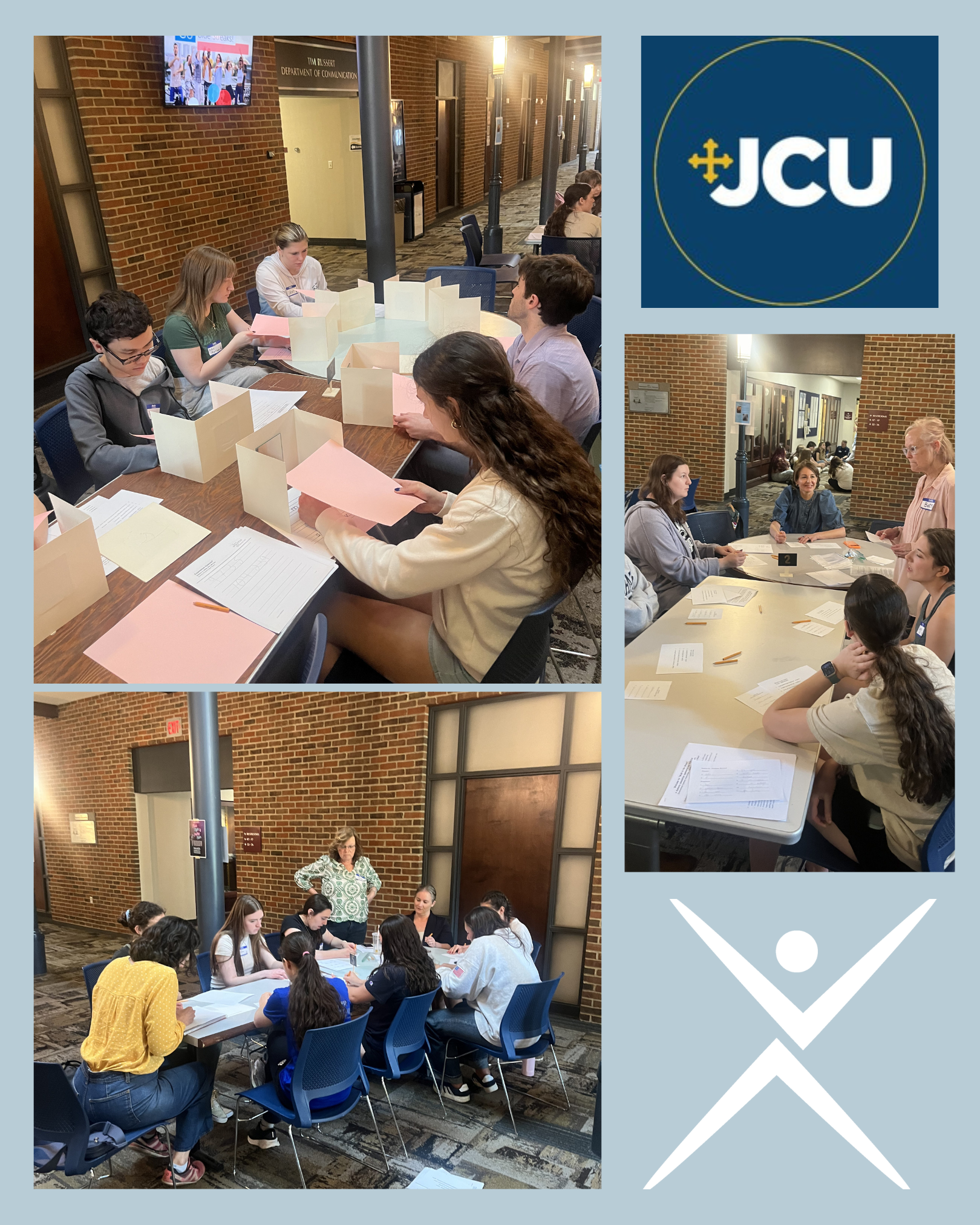 |
NOBIDA simulations are a helpful resource that many education and literacy focused organizations can use to strengthen literacy programming and increase empathy for all types of learners. We are proud to offer simulations throughout the region. If you think your school or organization would be interested in hosting, we are happy to discuss how our simulations help teachers, parents, and other interested individuals grow their understanding of dyslexia and the challenges faced by those with dyslexia in traditional learning environments. Contact us and learn more about the Dyslexia Simulation process! Photos of our team leading an IDA of Northern Ohio Dyslexia Simulation with JCU education students. |